Last checked: [August 26, 2026]

How this guide was prepared:
[Official-source research / Local route planning]
Photo note: This guide was prepared before September 2026, so I have not yet photographed Seoul during the month itself. The temporary photographs used in this article are open-license images and are fully credited beneath each image. I plan to replace or supplement them with my own photographs after visiting the featured locations in September.
Quick Answer
September is a transition month in Seoul.

The first half of the month can still feel like summer, especially during the afternoon. As the month continues, however, the evenings become more comfortable for walking, outdoor performances and time beside the Han River.

For most travelers, the best packing strategy is simple: bring short-sleeved clothes for the daytime, one light outer layer for the evening and a compact umbrella for unexpected rain.

In 2026, the most important dates to know are September 24 to 26, when Korea celebrates Chuseok. Seoul does not completely close during the holiday, but some restaurants and independent shops may take several days off, and intercity transportation can become difficult to book.

The strongest September experiences this year include:

• Gyeongbokgung Palace at night
• Seoul Light DDP
• The Car-Free Jamsugyo Walking Festival
• Seoul Autumn Festa and the Seoul Street Arts Festival
• Chuseok foods and cultural programs
At a Glance
| Item | What to Expect |
|---|---|
| Overall feel | Late summer at the beginning, early fall toward the end |
| Historical average temperature | Approximately 23.7°C |
| Historical average rainfall | Approximately 134.5 mm |
| Best daytime clothing | Short sleeves and light trousers or shorts |
| Useful evening layer | A thin shirt, cardigan or light jacket |
| Useful item | Compact umbrella |
| Best outdoor time | Late afternoon and evening |
| Major 2026 holiday | Chuseok, September 24–26 |
| Best experiences | Palace nights, media art, riverside festivals and outdoor performances |
| Autumn foliage | Usually too early to plan your entire trip around peak fall color |
Seoul’s official historical climate table lists an average September temperature of 23.7°C and average rainfall of 134.5 mm. These figures describe long-term monthly conditions, not a forecast for your exact travel dates.
Is September a Good Time to Visit Seoul?
Yes—especially if you enjoy walking, evening events and outdoor spaces.
September sits between Seoul’s hottest summer period and its more obvious autumn season. You can still enjoy warm afternoons, but nighttime activities usually become more comfortable as the month progresses.
It is a particularly good month for:
- Walking through central Seoul after sunset
- Visiting palaces during special nighttime openings
- Spending an evening beside the Han River
- Combining cafés, parks and outdoor performances
- Traveling with relatively light luggage
There are, however, three important limitations.
First, early September can still feel hot and humid. Do not pack as though you are arriving in cold autumn weather.
Second, September is generally too early to build your trip around peak red foliage. You may notice the season beginning to change, but the city will not necessarily look like the deep-orange autumn photographs often used in travel advertisements.
Third, travelers visiting during Chuseok need to check opening hours and transportation more carefully than usual.
What the Weather Really Feels Likes
Early September
During the first part of September, short sleeves will usually be the most practical choice during the day.
Walking under direct sunlight can still feel tiring, and Seoul’s shops, cafés and subway trains may continue to use strong air conditioning. A thin long-sleeved shirt can therefore be useful even when the outdoor temperature feels warm.
Outdoor activities are often more comfortable after the strongest afternoon sun has passed. For routes involving Gyeongbokgung, Cheonggyecheon, Euljiro or the Han River, consider beginning in the late afternoon and continuing into the evening.
Late September
By late September, the difference between daytime and nighttime can become more noticeable.
A T-shirt may still be sufficient during the afternoon, but a cardigan, overshirt or lightweight jacket can be useful after sunset—particularly beside the Han River or during long outdoor performances.
Rain is still possible throughout the month, so a small folding umbrella is worth carrying even when the morning looks clear. Seoul’s September climate averages also show that the month is not completely dry.
Best Things to Do in Seoul in September 2026
1. See Gyeongbokgung Palace at Night
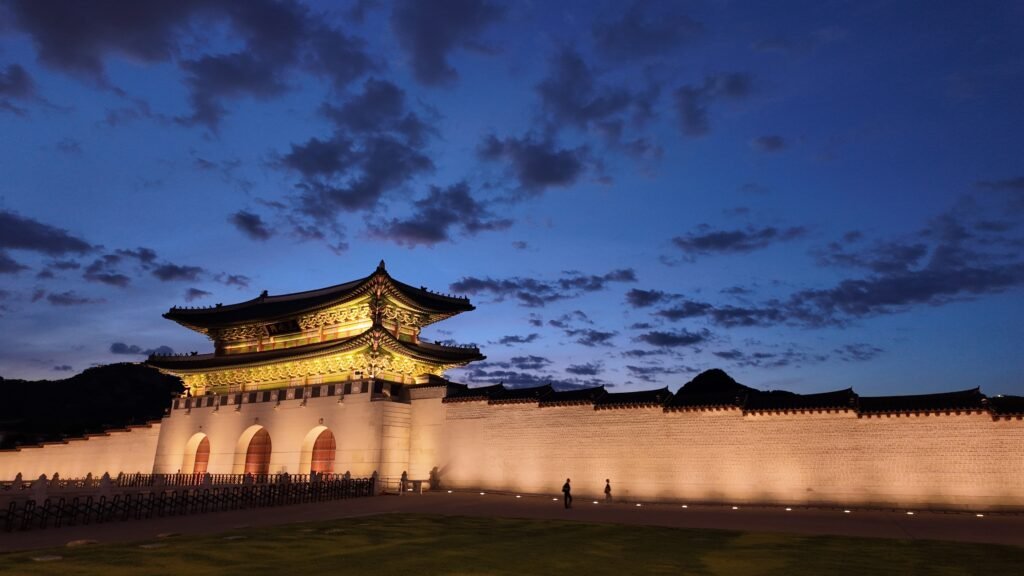
Gyeongbokgung Palace’s 2026 fall nighttime opening runs from September 2 to October 2.
The palace is open for nighttime visits from 7:00 p.m. to 9:30 p.m., with final admission at 8:30 p.m. There is no nighttime opening on Mondays or Tuesdays. Admission costs 3,000 won. (about $2.2)
For international visitors, up to 300 same-day tickets are allocated each night. Each person can purchase up to two tickets and must bring a passport or another document showing foreign nationality. Online advance tickets are also available, but regular online reservations cannot be made on the day of the visit.
Visitors wearing a qualifying hanbok can enter free of charge, although the palace applies specific hanbok guidelines. Free-entry visitors should still bring identification where applicable.
Practical Tips
- Avoid planning your visit for Monday or Tuesday.
- Bring your passport if you intend to purchase a foreigner ticket on site.
- Arrive before final admission rather than aiming for the last possible entry.
- Bring an umbrella if rain is forecast; the nighttime opening normally continues in wet weather.
- Wear comfortable shoes because the palace grounds are large and some areas are dimly lit.
- Combine the palace with an early dinner in Seochon, Jongno or near Gwanghwamun.
The palace is beautiful after dark, but this is not a hidden local event. Expect more visitors on Fridays, weekends and dates with favorable weather.
2. Watch Seoul Light DDP
Seoul Light DDP 2026 Fall runs from September 3 to 13, every evening from 7:30 p.m. to 10:30 p.m.
The event uses the curved exterior of Dongdaemun Design Plaza as a 222-meter media façade. The 2026 fall program includes media art inspired by Korean artists and cultural works, accompanied by laser art and selected live performances. General viewing is free.
You do not need to build an entire day around the event. It works best as the final stop of an Euljiro or Dongdaemun evening.
A Simple Way to Plan It
Start with a late-afternoon walk along Cheonggyecheon, continue through Euljiro for street photography or dinner*, and then move to DDP after sunset.
* [Seoul’s Local Soul #1] Local’s Go-To Korean BBQ Spot: Ilgwangsa in Euljiro
Allow extra time on weekends because the most popular viewing areas can become crowded.
3. Walk Across Jamsugyo Without Cars
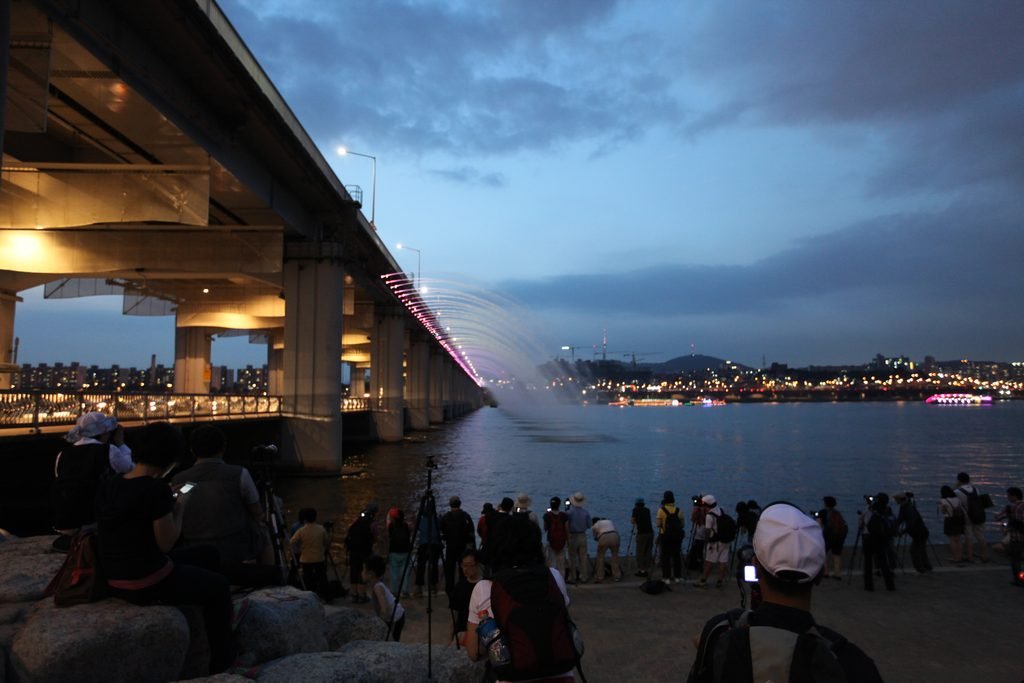
ⓒBryan Dorrough, via Wikimedia Commons, licensed under CC BY 2.0.
The fall edition of the Car-Free Jamsugyo Walking Festival takes place every Sunday from September 6 to October 25, 2026.
In September, the festival dates are:
| Date | Main Program |
|---|---|
| September 6 | Jamsugyo Water Wars |
| September 13 | Student performances and activity programs |
| September 20 | Jamsugyo Fall Field Day |
| September 27 | Chuseok cultural performances and traditional games |
The overall festival operates from 2:00 p.m. to 10:00 p.m. around Jamsugyo Bridge and Banpo Hangang Park. Admission is free, although some food and experience programs cost extra.
The bridge is closed to vehicles from noon until midnight on festival Sundays. Public transportation is strongly recommended because nearby roads, parking areas and taxi pickup points can become congested.
A good plan is to arrive in the late afternoon, walk across the bridge before sunset, have something to eat and remain beside the river as the city lights begin to appear.
Check the official festival notice again on the day of your visit, particularly when rain or strong wind is forecast.
Even when you plan to take a taxi* afterward, walk away from the most crowded road-control area before requesting one.
4. Combine Seoul Forest with Seoul Autumn Festa
The 2026 Seoul Autumn Festa begins on September 18 and continues across Seoul until November 29.
Its opening performance is scheduled for 7:30 p.m. on September 18 at the waterside stage in Ttukseom Hangang Park. The Seoul Street Arts Festival then takes place on September 19 and 20 around Ttukseom Hangang Park and Seoul Forest.
This is one of the easiest September events to build into a normal day in Seoul.
You can spend the afternoon in Seoul Forest, walk through Seongsu’s cafés and shops, have an early dinner, and then continue toward Ttukseom Hangang Park for the evening program.
Unlike an event held inside a single venue, the street arts program is spread across outdoor spaces. Check individual performance locations and times before arriving.
More September Events
| Event | Date | Area | Why Consider It |
|---|---|---|---|
| Seoul Intangible Cultural Heritage Festival | Sep. 12–13 | Namsangol Hanok Village | Traditional performances, demonstrations and experiences |
| Seoul Street Arts Festival | Sep. 19–20 | Seoul Forest and Ttukseom | Outdoor performances across the area |
| Chuseok Holiday | Sep. 24–26 | Nationwide | Korea’s major harvest holiday |
The 2026 Seoul Intangible Cultural Heritage Festival is scheduled for September 12 and 13 around Namsangol Hanok Village, with performances, exhibitions, demonstrations and traditional cultural activities.
Event schedules can change because of weather, safety conditions or organizer decisions. Confirm the latest schedule on the official event page one day before visiting.
Visiting Seoul During Chuseok
In 2026, the official Chuseok holiday runs from September 24 to 26.
Chuseok is one of Korea’s most important traditional holidays. Families travel across the country to spend time together, visit ancestral graves and share holiday food.
For travelers, the important point is this:
Seoul does not completely shut down, but it does not operate exactly like a normal week either. As a personal tip, I especially love Seoul during Chuseok because the city feels noticeably quieter and less crowded, making it wonderfully peaceful !
Government offices and banks close for the public holiday. Palaces, museums, department stores and major leisure facilities generally remain open, but individual attractions should still be checked. Independent restaurants, cafés and small shops may close for one or several days.
1. Check Every Restaurant Individually
Do not assume that an area with hundreds of restaurants will operate normally.
Check:
- The latest NAVER Map opening hours
- Recent visitor reviews
- The restaurant’s Instagram account
- A holiday notice posted on the door
- A phone call or hotel-front-desk confirmation
NAVER Map* information is useful, but a business may announce its Chuseok schedule only a few days before the holiday.
* The Essential Map App for Korea: A Guide to NAVER Map
2. Do Not Plan a Spontaneous Intercity Trip
Chuseok is a major domestic travel period.
Do not plan to wake up during the holiday and casually purchase same-day tickets from Seoul to Busan, Gyeongju, Jeonju or another distant city.
Reserve intercity trains, express buses and domestic flights in advance. If you cannot secure transportation, keep your itinerary within Seoul rather than building the day around an uncertain ticket.
3. Save Backup Restaurants
For each neighborhood, save at least two or three possible restaurants.
This is especially useful in smaller dining districts where one holiday closure may remove your main reason for visiting.
A simple method is to create separate NAVER Map lists such as:
- Jongno backups
- Euljiro backups
- Seongsu backups
- Near hotel
- Open during Chuseok
4. Recheck Palaces and Museums
Major public attractions may open during Chuseok, sometimes with special programs, but operating days and reservation rules can vary.
Check the official website the evening before your visit, even when an older blog post says the attraction will be open.
Chuseok Travel Checklist
- Confirm each restaurant’s holiday opening hours
- Reserve intercity transportation in advance
- Save Korean names and addresses in NAVER Map
- Keep two or three backup restaurants in each area
- Recheck palace and museum schedules
- Check outdoor-event notices for rain or cancellation
- Avoid depending on one tightly timed itinerary
FAQs
Is Seoul Still Hot in September?
It can be.
The first part of September may still feel like summer during the afternoon. Later in the month, evenings generally become more comfortable, but visitors should check the forecast for their exact dates rather than assuming the weather will be cool. Seoul’s historical average temperature for September is approximately 23.7°C.
What Should I Wear in Seoul in September?
Wear short sleeves during warm days and carry one light outer layer for the evening.
Comfortable shoes and a compact umbrella are more useful than a thick coat.
Does It Rain a Lot in Seoul in September?
September is not Seoul’s wettest month, but rain is still possible.
The city’s historical climate table lists approximately 134.5 mm of average rainfall for September. Treat that number as background climate information rather than a prediction for your trip.
Is Seoul Open during Chuseok?
Yes, but some businesses close.
Major tourist attractions, palaces, museums, department stores and leisure facilities generally remain open during public holidays, while individual restaurants and independent shops may close for several days. Always check the specific place you plan to visit.
Can I See Autumn Foliage in September?
You may notice the beginning of seasonal change, particularly later in the month, but September is usually too early to guarantee peak foliage across Seoul.
Do not plan your entire trip around red leaves without checking the year’s latest foliage conditions.
Is September a Good Month for Walking in Seoul?
Yes, particularly in the late afternoon and evening.
Palace night openings, riverside festivals, Cheonggyecheon, Seoul Forest and outdoor performance programs make September a good month for visitors who enjoy exploring on foot.
Do I Need to Reserve September Festivals?
Many outdoor events are free and allow walk-in viewing, but individual programs may require advance registration.
Gyeongbokgung nighttime admission has ticket limits, and selected Jamsugyo activities also use advance or on-site registration. Check the official program rather than assuming every activity is open without booking.